
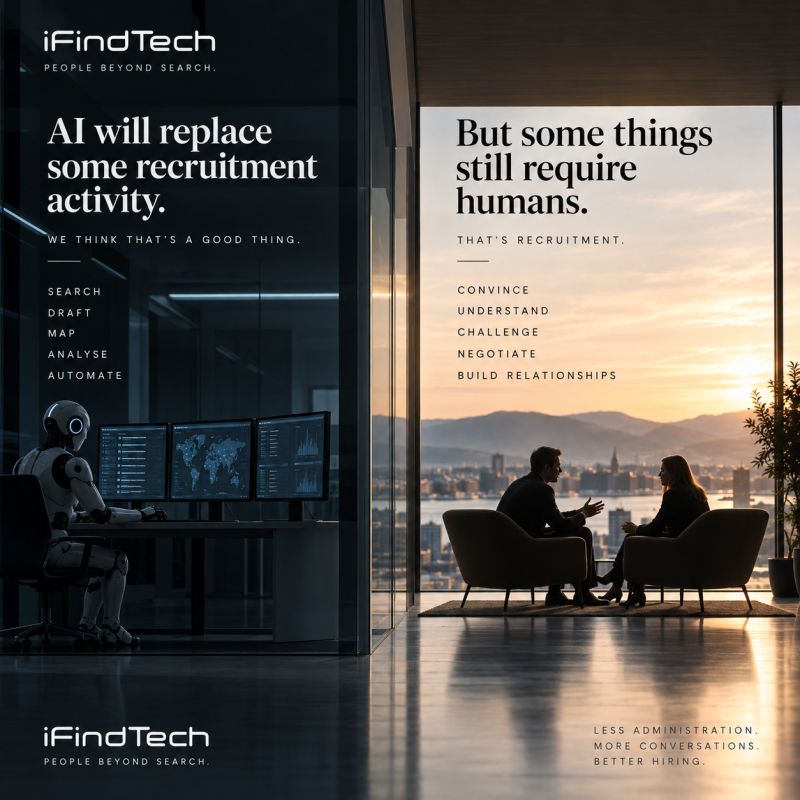
AI will replace some recruitment activity.
We think that’s a good thing.
Hours spent manually searching databases?
Automate it.
Writing the first version of a job advert?
Use AI.
Mapping hundreds of companies?
AI.
Analysing market data?
Absolutely.
But convincing an exceptional engineer to consider a company they’ve never heard of?
Understanding why somebody earning 900k NOK might move for 850k NOK?
Telling a client that the “perfect candidate” they’ve described probably doesn’t exist?
Managing two competing offers when both sides think they have all the leverage?
That’s recruitment.
We’re embracing AI because it gives our recruiters more time to do the parts of the job that actually require recruiters.
Less administration.
More conversations.
Better information.
Better hiring.
A big Happy Birthday to Charlie Sullivan! 🎉
Wishing you a fantastic day from all of us at iFindTech.
Hopefully you’ll allow yourself a cheat day today, C-Sul! 😂🍻
The best career moves don’t always happen when you’re actively looking.
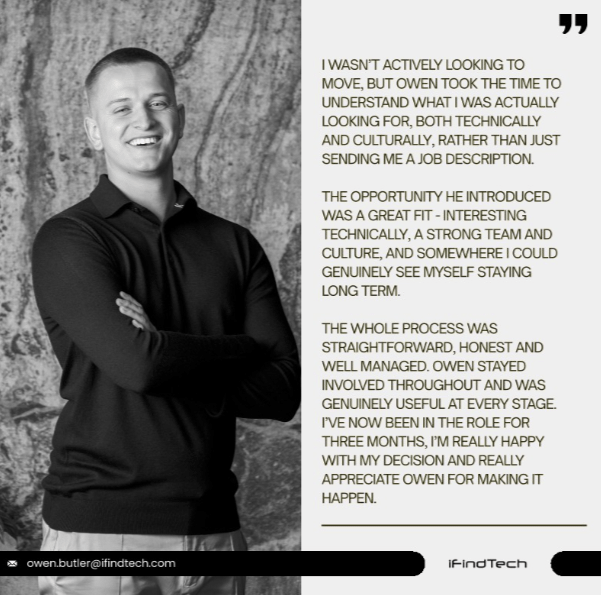
A great piece of candidate feedback for Owen Butler after taking the time to understand what really mattered and introducing an opportunity that matched both technically and culturally. Three months in, and they’re still really happy with the move.
Recruitment done properly is about finding the right fit, not just filling a role.
#TechRecruitment #Sweden #SoftwareEngineering #Hiring
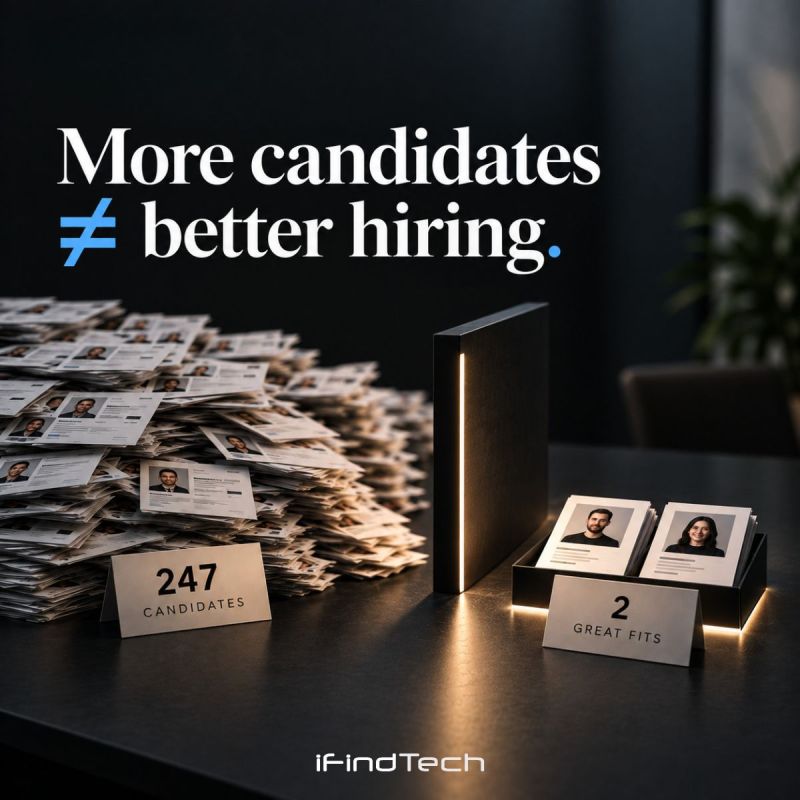
Five CVs doesn’t necessarily mean five options.
Sometimes we’d rather send two.
Two people we’ve spoken to properly.
Two people who understand the opportunity.
Two people whose motivations make sense.
Two people who we’d genuinely be comfortable putting our name behind.
Technology makes it increasingly easy to produce enormous candidate lists.
That’s not necessarily progress.
Our job isn’t to give clients more profiles to review.
It’s to reduce the noise between “we need someone” and “we’ve found them.”
That’s a very different objective.
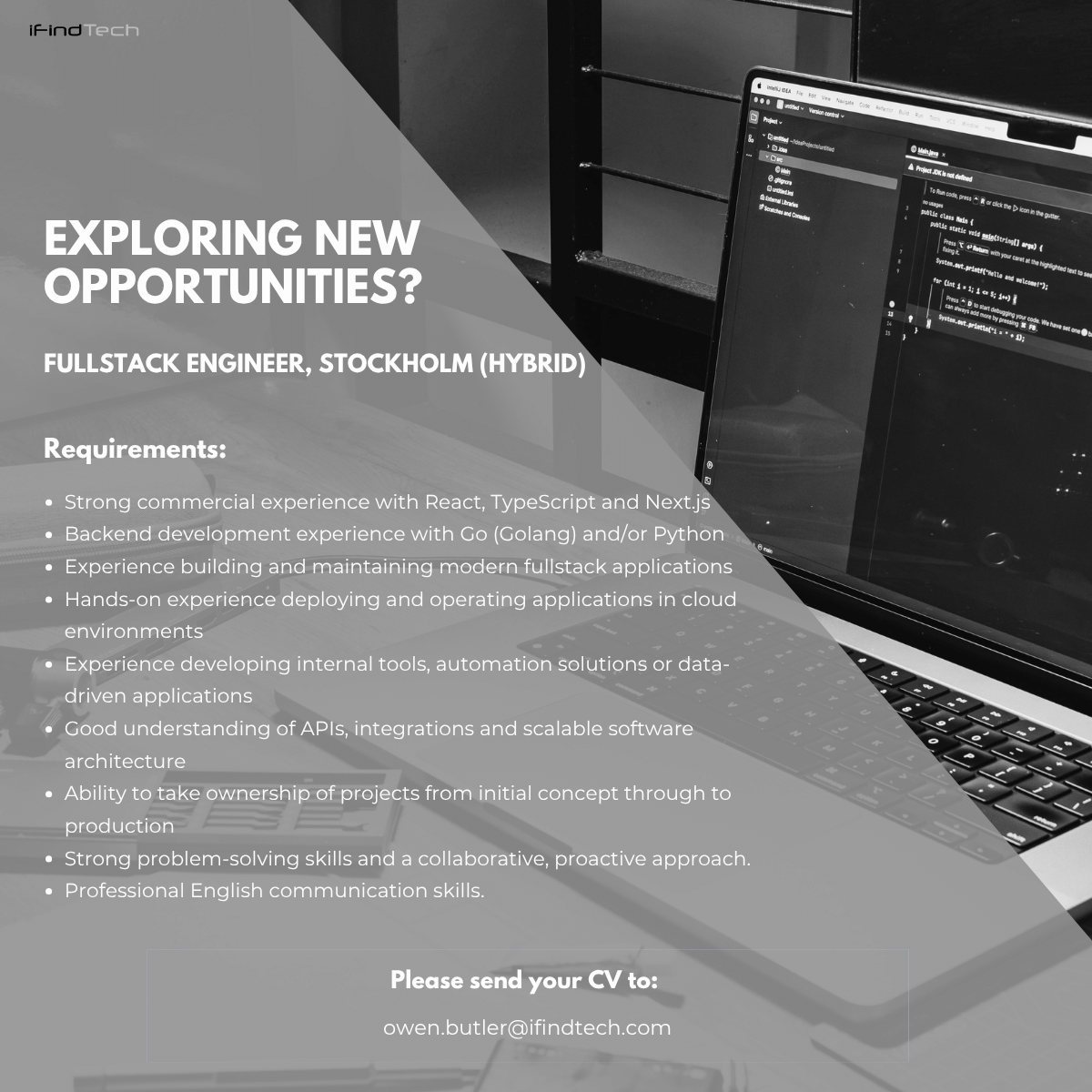
🚀 Fullstack Engineer – Stockholm (Hybrid)
We’re working with an exciting company in Stockholm looking for a talented Fullstack Engineer to join their growing team.
You’ll be working with React, TypeScript, Next.js, Go and/or Python, building scalable applications, developing internal tools and taking ownership of projects from concept through to production.
If you’re an experienced Fullstack Engineer looking for your next challenge, we’d love to hear from you!
📩 owen.butler@ifindtech.com
#Hiring #FullstackEngineer #Stockholm #TechJobs #React
AI is changing what it means to stand out as a developer.
So we asked 6 of our consultants one simple question:
How can developers make themselves more attractive to employers in an AI-driven market?
👉 Swipe through for the team’s take
What would you add?
#iFindTech #SoftwareEngineering #AI #TechCareers #TechRecruitment
Hard work deserves to be rewarded! 🥂
Which means another well-earned Lunch Club!
A big shoutout to Andy MacKay, Owen Butler and Ellis Sullivan for their fantastic performances 👏
Recruitment isn’t always easy. It takes consistency, resilience and plenty of determination to succeed.
Another great month in the books and a perfect excuse to get away from the desks, enjoy some good food and a few drinks! 🍻💪
#iFindTech #LunchClub #TechRecruitment
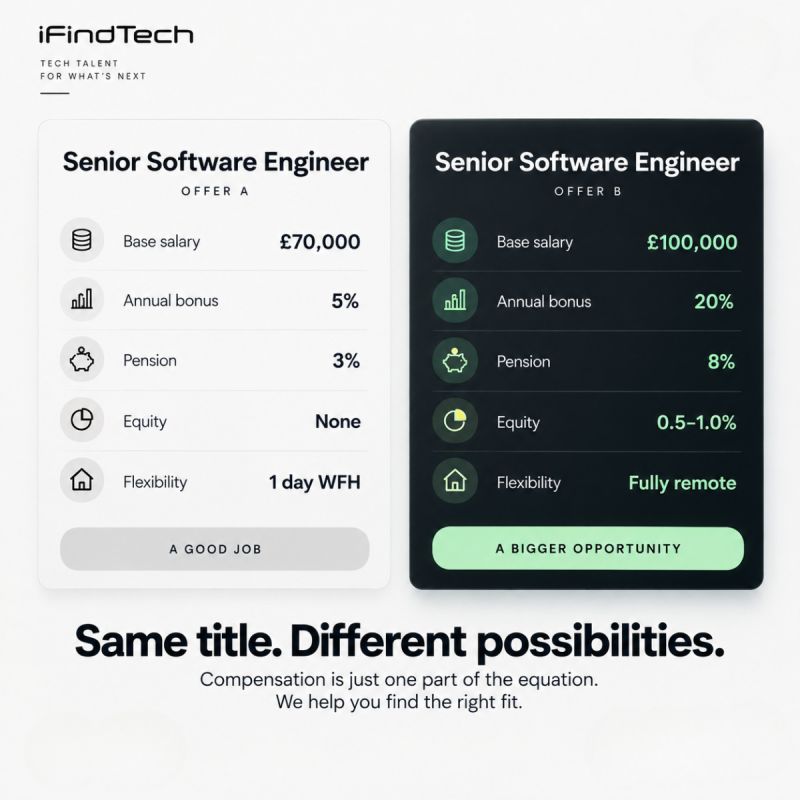
One of the easiest ways to lose a good engineer is to benchmark salary too simplistically.
“What’s the average Senior Developer salary in Stockholm?”
It’s a useful question.
But it’s not enough.
A Senior Developer at a 40-person product company can be a completely different profile from a Senior Developer at a large enterprise.
Then you’ve got Staff and Principal titles, which vary even more between companies.
Add specialist experience in areas like AI, security, platform engineering, mobile or distributed systems and the range gets wider again.
Norway adds another layer because compensation expectations don’t map perfectly against Sweden.
Then candidates compare pension, bonus, equity, holiday, flexibility and sometimes contracting income too.
We spend a lot of time talking to engineers about compensation before they’re actively interviewing.
That’s often where the useful salary data comes from.
Not what someone accepted two years ago.
What it would actually take for them to move today.




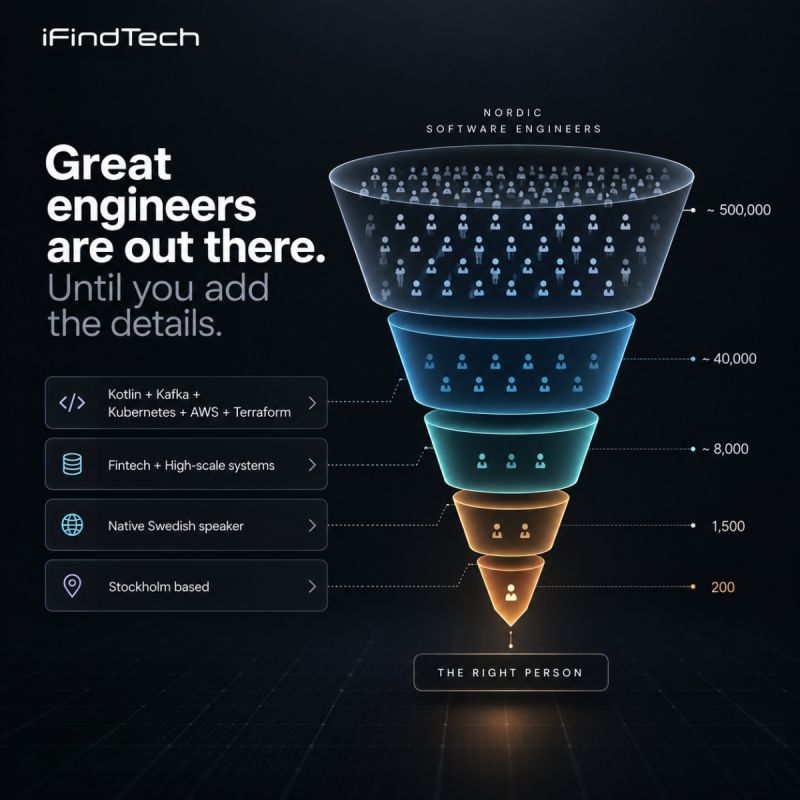


Stack: Kotlin · Kafka · Kubernetes · AWS · Terraform
Domain: Fintech · High-scale systems
Profile: Native Swedish · Stockholm-based
Then perhaps a very specific salary range on top.
Individually, none of those requirements sounds unreasonable.
Combine them and you’ve reduced the market dramatically.
This is where good hiring managers do something important.
They separate:
“Must already know”
from
“Can learn quickly”.
If someone is an exceptional Java engineer who understands distributed systems deeply, does Kotlin really need to be mandatory?
If they’ve operated Kubernetes on GCP, is AWS genuinely a blocker?
Sometimes it is.
Often it isn’t.
The strongest hiring processes we work on tend to identify the two or three things that genuinely predict success and stay flexible around the rest.
We’d take an exceptional 90% candidate over an average 100% keyword match every time.